
Introduction
Artificial Intelligence is everywhere—from smartphones to smart cities. But most people assume AI always works through the cloud.
That’s no longer true.
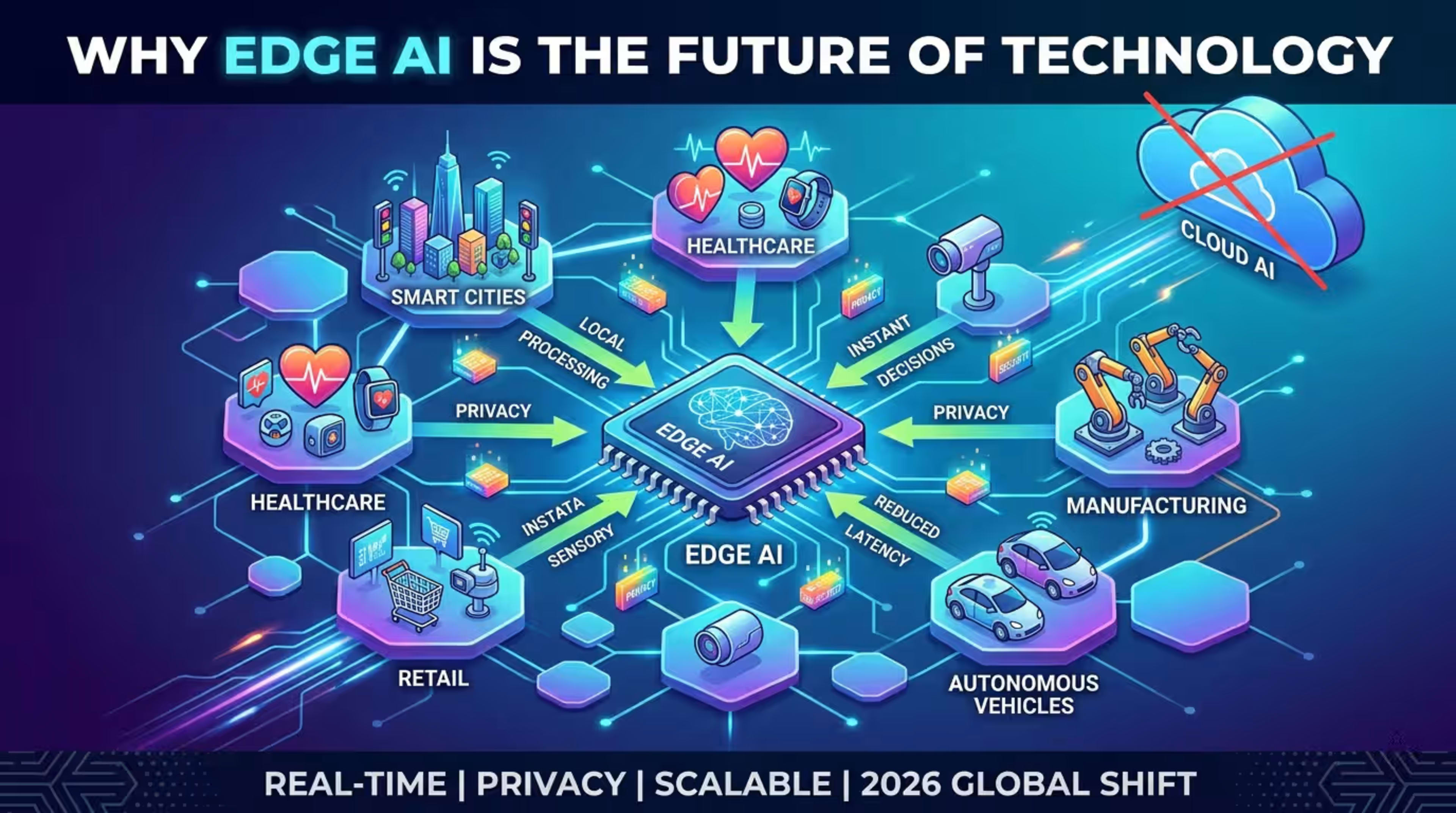
A new approach called Edge AI is changing how intelligent systems work by bringing AI directly to devices like phones, cameras, and sensors.
In this beginner-friendly guide, you’ll learn:
What Edge AI is (in simple terms)
How it works
Real-world examples
Benefits and challenges
Why it’s the future of AI
What Is Edge AI? (Simple Explanation)
Edge AI means running artificial intelligence directly on a device where data is generated, instead of sending that data to the cloud for processing.
👉 In simple words:
Edge AI = AI running locally (on your device)
For example:
Face unlock on your phone
Smart CCTV detecting motion
Voice assistants working offline
These systems process data instantly without needing internet connectivity.
📌 According to experts, Edge AI allows AI models to run “on devices close to where data is created,” reducing the need to send data to remote servers.
Why Edge AI Matters More Than Ever in 2026
The world is generating more data than ever before:
Billions of IoT devices
Smart city infrastructure
Autonomous systems
Sending all this data to the cloud is:
Slow
Expensive
Risky (privacy concerns)
👉 Edge AI solves this by bringing intelligence closer to the source.
✌️Explore More:-
↗️ Edge AI in India: How Smart Cities Are Becoming Truly Intelligent (2026 Guide)
↗️ Smart Energy Management Using AI: The Future of Power System
↗️ Smart Waste Management Using AI: The Future of Clean Cities
↗️ How AI Is Revolutionizing Traffic Management in India
How Edge AI Works (Step-by-Step Explained Simply)
How Does Edge AI Work?
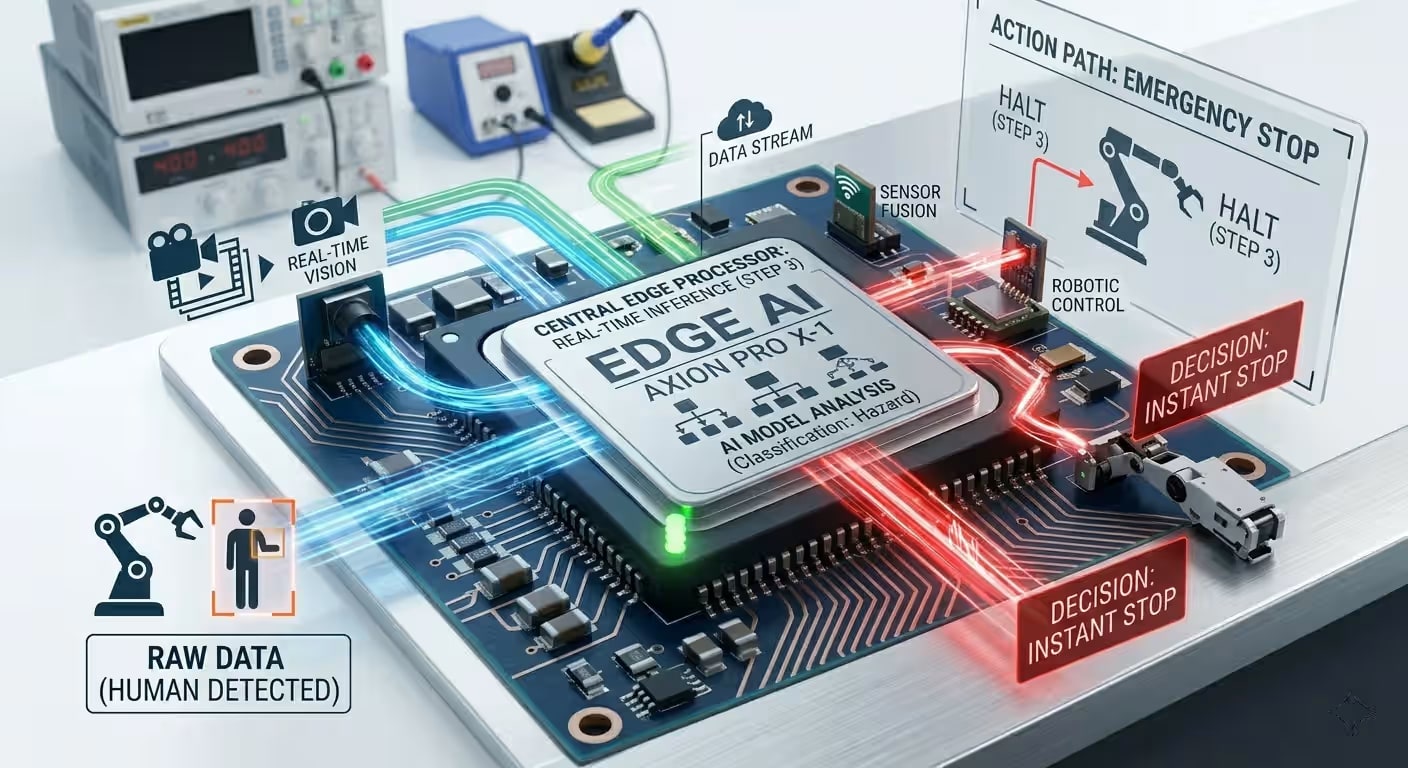
Edge AI follows a simple workflow:
Step 1: Model Training (Cloud)
AI models are trained using large datasets in the cloud
Requires high computing power
Step 2: Model Deployment (Edge)
Trained models are deployed to edge devices
Devices include smartphones, IoT sensors, cameras
Step 3: Real-Time Inference
Device processes data locally
Gives instant results
👉 Important concept:
Edge devices usually handle inference (prediction), while the cloud handles training.
Edge AI vs Traditional (Cloud) AI
Feature | Edge AI | Cloud AI |
|---|---|---|
Processing Location | On-device | Remote servers |
Speed | Instant | Delayed |
Internet Required | No | Yes |
Privacy | High | Moderate |
Cost | Lower long-term | Higher |
👉 The biggest shift is:
From centralized AI → distributed intelligence
Real-World Examples of Edge AI
📱 1. Smartphones
Face recognition
Camera AI filters
Voice assistants
🎥 2. Smart Surveillance
Real-time threat detection
Motion alerts
🚗 3. Autonomous Vehicles
Instant object detection
Real-time decision-making
🏭 4. Smart Factories
Predictive maintenance
Defect detection
⌚ 5. Wearable Devices
Health monitoring
Fitness tracking
👉 These applications require instant responses, which cloud AI cannot always provide.
Key Benefits of Edge AI
⚡ 1. Ultra-Fast Processing
No need to send data to the cloud → instant results.
🔒 2. Better Privacy
Data stays on your device, reducing security risks.
🌐 3. Works Without Internet
Edge AI systems can function offline.
💰 4. Lower Costs
Less bandwidth usage → reduced cloud expenses.
📉 5. Reduced Latency
Processing happens locally → no delays.
Challenges of Edge AI
❌ 1. Limited Hardware Power
Devices are less powerful than cloud servers.
❌ 2. Model Optimization Needed
AI models must be compressed (quantization, pruning).
❌ 3. Security Risks
Edge devices can be vulnerable if not secured.
❌ 4. Update Complexity
Updating models across thousands of devices is difficult.
Why Edge AI Is Growing Rapidly
Edge AI is booming because:
IoT devices are increasing rapidly
5G enables faster connectivity
Privacy concerns are rising
Real-time applications are expanding
👉 Experts highlight that Edge AI improves speed, privacy, and efficiency by processing data closer to its source.
Edge AI + Cloud AI: The Hybrid Future
Edge AI is powerful—but it doesn’t replace the cloud.
Instead, the future is:
Edge AI → real-time decisions
Cloud AI → training & analytics
This hybrid model gives:
Speed + intelligence
Efficiency + scalability
↗️ Edge AI vs Cloud AI: Key Differences, Benefits & Real-World Use Cases (2026 Guide)
Conclusion
Edge AI is transforming how artificial intelligence works by moving it closer to the real world.
Instead of relying entirely on cloud systems, Edge AI enables:
Faster decisions
Better privacy
Real-time intelligence
As devices become smarter and more connected, Edge AI will play a crucial role in shaping the future of technology.