

Introduction: India’s Waste Crisis and the Need for Smart Solutions
Every day, Indian cities generate massive amounts of waste—ranging from household garbage to industrial and electronic waste. With rapid urbanization, this problem is only getting worse.
Traditional waste management systems struggle with:
Overflowing bins in public areas
Irregular garbage collection schedules
Lack of real-time monitoring
Inefficient route planning
👉 The result?
Increased pollution
Health hazards
Poor urban hygiene
Higher operational costs for municipalities
But in 2026, cities are moving toward a smarter approach.
Artificial Intelligence (AI), combined with Edge AI and IoT, is revolutionizing how waste is managed—making cities cleaner, more efficient, and environmentally sustainable.
What Is Smart Waste Management?
Smart waste management uses AI, IoT (Internet of Things), and data analytics to improve how waste is collected, processed, and recycled.
👉 Instead of traditional fixed schedules, AI systems:
Monitor waste levels in real-time
Optimize collection routes
Automate waste sorting
📌 Simple Example:
A smart bin with sensors sends data to a system when it’s full → AI schedules pickup → truck arrives only when needed.
Why Traditional Waste Management Systems Fail
Before understanding the AI solution, it’s important to identify the problems:
1. Static Collection Routes
Garbage trucks follow fixed routes—even if bins are empty or overflowing.
2. No Real-Time Data
Municipalities don’t know:
Which bins are full
When they need collection
3. High Operational Costs
Fuel, manpower, and time are wasted due to inefficiencies.
4. Poor Waste Segregation
Recyclable and non-recyclable waste often gets mixed.
👉 These challenges make traditional systems unsustainable for growing cities.
⚠️ Why Cities Need AI-Based Waste Solutions
Urban cities are growing rapidly, especially in India.
🚧 Major Problems:
Overflowing garbage bins
Inefficient collection routes
High fuel and labor costs
Poor recycling systems
Environmental pollution
👉 Traditional systems are manual and inefficient.
AI solves these problems with automation + intelligence.
How AI Waste Management Works (Step-by-Step Deep Dive)
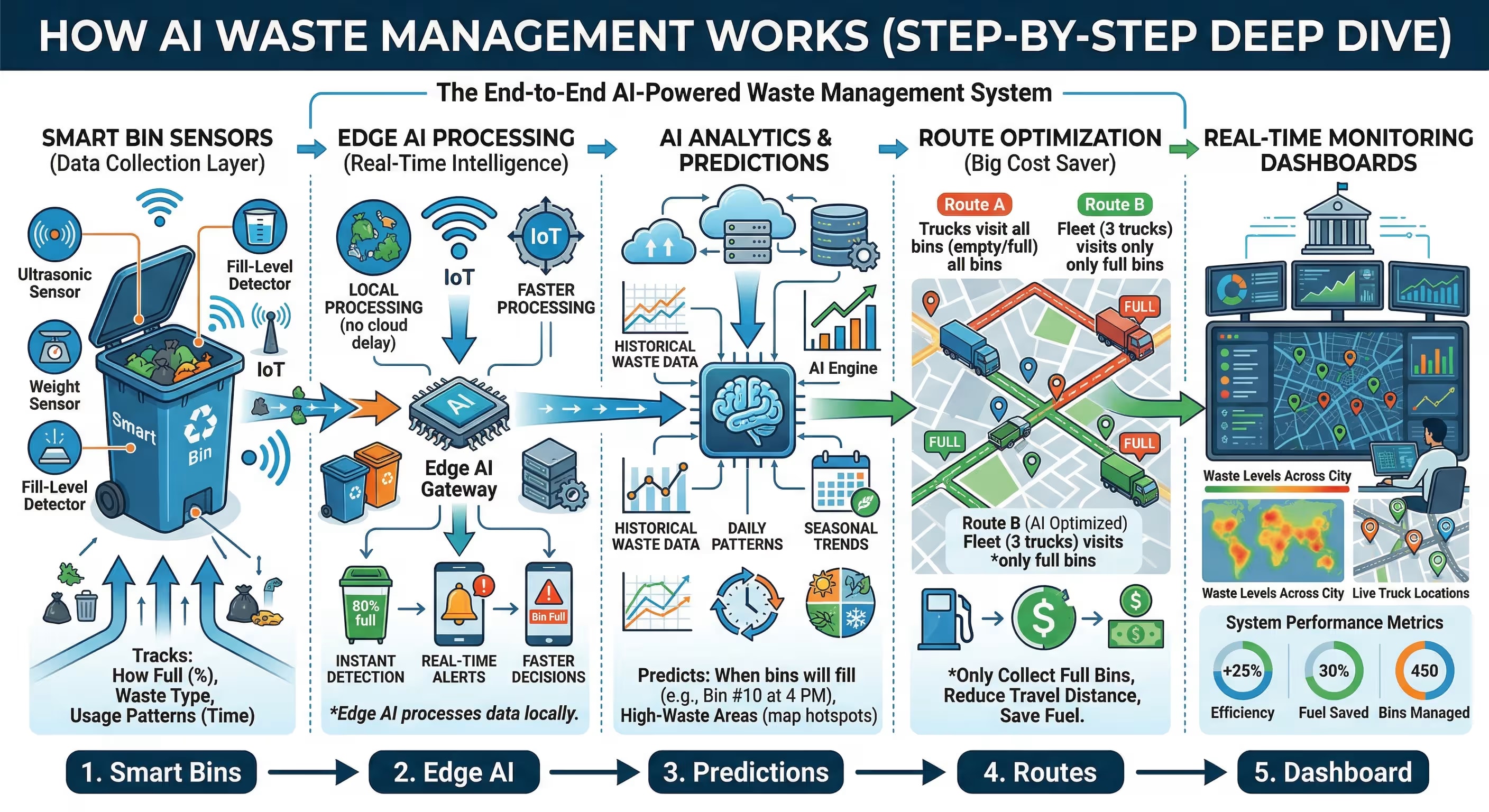
Step 1: Smart Bin Sensors (Data Collection Layer)
Modern waste bins are equipped with:
Ultrasonic sensors
Weight sensors
Fill-level detectors
These sensors track:
How full the bin is
Type of waste
Usage patterns
Step 2: Edge AI Processing (Real-Time Intelligence)
Instead of sending all data to the cloud:
👉 Edge AI processes data locally
This enables:
Instant detection of full bins
Real-time alerts
Faster decisions
👉 Learn the core concept:
➡️ What Is Edge AI?
Step 3: AI Analytics & Predictions
AI systems analyze:
Historical waste data
Daily patterns
Seasonal trends
👉 This helps predict:
When bins will fill
Which areas generate more waste
Step 4: Route Optimization (Big Cost Saver)
AI creates optimized routes for garbage trucks:
Only collect from full bins
Reduce travel distance
Save fuel
Step 5: Real-Time Monitoring Dashboards
City authorities can monitor:
Waste levels across the city
Truck locations
System performance
Key Technologies Behind Smart Waste Management
1. IoT (Internet of Things)
Connects bins, trucks, and systems
2. Edge AI
Processes data instantly on devices
3. Machine Learning
Predicts waste patterns and behavior
4. GPS Tracking
Optimizes truck movement
5. Cloud Integration
Stores long-term data for analysis
Real-World Example: How a Smart City Uses AI Waste Systems
Imagine a city like Indore or Pune:
Smart bins detect when they are 80% full
AI predicts they will be full in 2 hours
Collection truck is automatically routed
Waste is picked up before overflow
👉 Result:
No overflowing bins
Cleaner streets
Efficient operations
Major Benefits of AI Waste Management
✔ 1. Cleaner Cities
Overflowing bins are eliminated through proactive collection.
✔ 2. Cost Reduction (Up to 30–40%)
Savings come from:
Reduced fuel usage
Fewer trips
Optimized manpower
✔ 3. Improved Public Health
Cleaner environments reduce:
Disease spread
Air and water pollution
✔ 4. Better Recycling Efficiency
AI helps:
Identify recyclable materials
Improve waste segregation
✔ 5. Environmental Sustainability
Reduced landfill waste
Lower carbon emissions
AI and Recycling: The Next Big Leap
AI is not just managing waste—it’s transforming recycling.
AI-Powered Sorting Systems
Identify plastic, metal, glass
Separate materials automatically
👉 This increases recycling rates significantly.
Challenges of AI Waste Management
1. High Initial Investment
Installing:
Smart bins
Sensors
AI systems
requires capital.
2. Infrastructure Limitations
Not all cities have:
Digital infrastructure
IoT networks
3. Maintenance Issues
Devices need:
Regular monitoring
Technical support
4. Public Awareness
Citizens must:
Use bins correctly
Support waste segregation
AI Waste Management in India: Current Scenario
India is rapidly adopting:
Smart city initiatives
AI-based municipal systems
Cities are experimenting with:
Smart bins
AI dashboards
Waste analytics
👉 Part of broader ecosystem:
➡️ Edge AI in Smart Cities India
Future of Waste Management (2026–2030)
1. Fully Automated Waste Systems
Robots and AI will handle waste collection.
2. Zero-Waste Cities
AI will minimize landfill usage.
3. AI-Driven Circular Economy
Waste will be reused efficiently.
4. Integration with Smart Homes
Homes will automatically sort waste.
How Businesses Can Benefit from AI Waste Management
Reduce operational costs
Improve sustainability
Enhance brand image
👉 Link this blog to:
Conclusion: Why AI Waste Management Is Essential
Waste management is no longer just a civic responsibility—it’s a technological challenge.
AI provides:
Efficiency
Sustainability
Scalability
👉 Cities that adopt AI today will lead tomorrow.