

Introduction
Energy systems are no longer just about generating electricity—they’re about managing it intelligently.
With rising demand, renewable energy adoption, and smart cities expansion, traditional power grids are struggling to keep up. This is where Artificial Intelligence (AI) is transforming the energy sector.
From predicting electricity demand to balancing entire power grids in real time, AI-powered smart energy management systems are becoming the backbone of future power infrastructure.
In this guide, we go beyond basics and explore:
How AI-driven energy systems actually work
Real use cases in India and globally
System architecture (developer perspective)
Benefits, challenges, and future trends
What Is Smart Energy Management Using AI?
Smart Energy Management (SEM) refers to using:
AI
IoT (sensors, smart meters)
Data analytics
…to monitor, control, and optimize energy usage in real time.
These systems can:
Track energy consumption across buildings and cities
Automatically adjust usage
Reduce waste and costs
👉 In India, SEM is becoming critical as energy demand grows rapidly and sustainability goals tighten
Why Traditional Energy Systems Are Failing
Traditional power systems face major issues:
Problems:
Energy wastage
Power outages
Poor demand prediction
High operational costs
Environmental impact
👉 These systems are not intelligent
AI solves this with automation + predictive analytics
How AI Is Transforming Energy Systems (Key Areas)
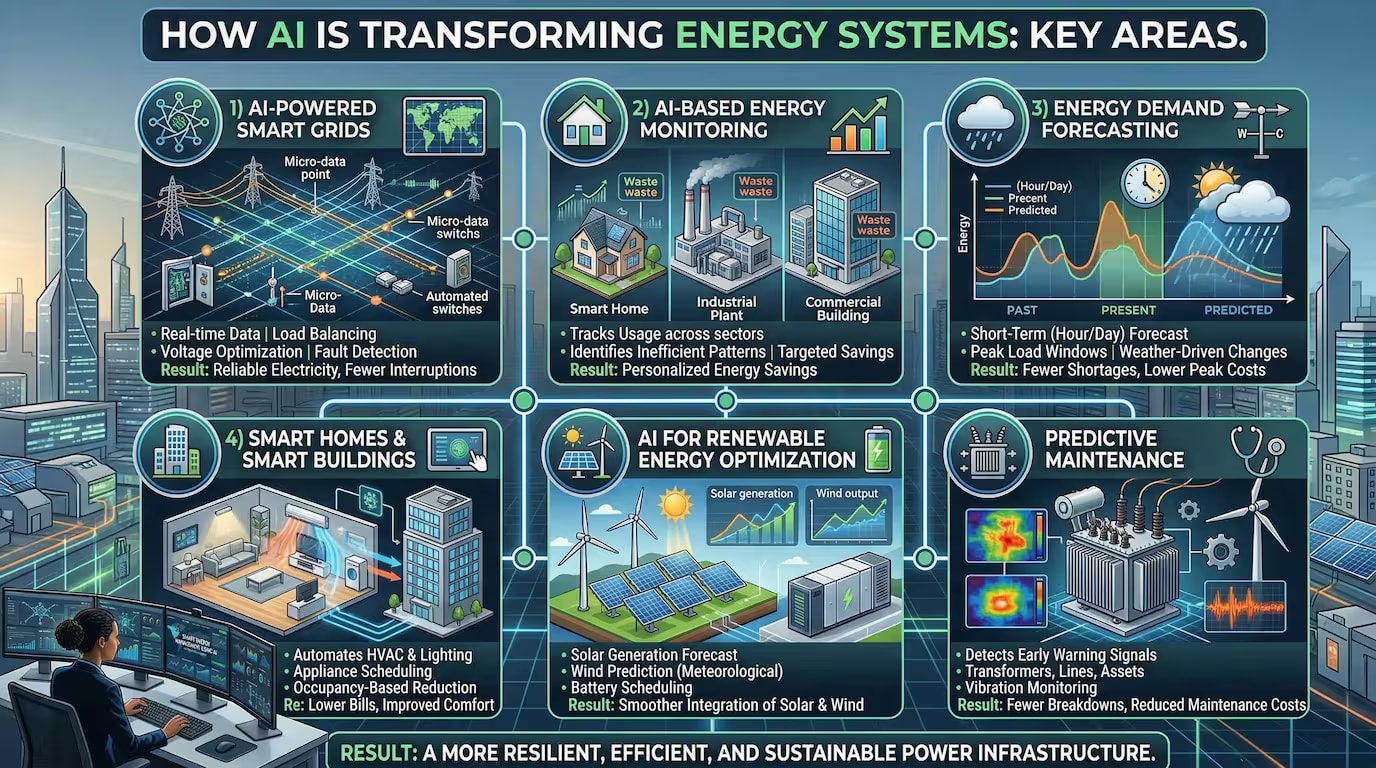
1) AI-Powered Smart Grids
An AI smart grid uses real-time data to balance supply and demand and maintain stability. AI helps with:
Load balancing and congestion management
Voltage/frequency optimization
Faster fault detection and isolation
Reduced transmission and distribution losses
Result: more reliable electricity with fewer interruptions.
2) AI-Based Energy Consumption Monitoring
AI-powered monitoring tracks usage across:
homes
industrial plants
commercial buildings
city infrastructure
It identifies waste patterns, such as equipment running during idle hours or inefficient peak-time usage.
Result: targeted energy savings instead of generic recommendations.
3) Energy Demand Forecasting Using AI
AI forecasting models predict:
short-term demand (next hour/day)
peak load windows
seasonal usage patterns
weather-driven consumption changes
Result: fewer shortages, lower peak costs, and improved grid stability.
4) Smart Homes and Smart Buildings (AI Energy Optimization)
Buildings are among the biggest energy consumers. AI automates:
HVAC optimization
lighting control
appliance scheduling
occupancy-based energy reduction
Result: lower electricity bills and improved comfort.
5) AI for Renewable Energy Optimization
Renewables are clean but variable. AI improves renewable reliability through:
solar generation forecasting using weather + historical output
wind prediction using meteorological and turbine data
battery scheduling to store and dispatch power efficiently
reducing curtailment (wasted renewable energy)
Result: smoother integration of solar and wind into the grid.
6) Predictive Maintenance in Power Systems
AI detects early warning signals in equipment such as:
transformers
switchgear
power lines
inverters and rotating assets
Common techniques include anomaly detection, thermal analytics, and vibration monitoring.
Result: fewer breakdowns and reduced maintenance cost.
Key Technologies Behind Smart Energy Systems
1. Smart Grids (The Backbone)
Smart grids use AI to:
Balance electricity flow
Detect faults instantly
2. IoT Devices
Connected devices monitor:
Energy usage
Equipment performance
3. Edge AI
Processes data locally for:
Faster response
Reduced latency
👉 Learn More:-
➡️ What Is Edge AI? Why Edge AI is the Future of Technology
4. Machine Learning Algorithms
Predict:
Energy demand
Equipment failures
5. Renewable Energy Integration Systems
AI manages:
Solar power
Wind energy
Real-World Smart Energy Systems in India
🇮🇳 1. Smart Campuses & Microgrids
Projects (like IIT campuses and industrial zones) use:
Solar + battery storage
AI monitoring systems
Real-time control centers
👉 Result:
Lower energy costs
Self-reliant power systems
Resilience during outages
🏭 2. Smart Factories (Industrial AI)
Factories in India are using AI to:
Track machine-level energy usage
Detect inefficiencies
Automate energy optimization
👉 This reduces operational costs and improves efficiency
🏠 3. Smart Homes & Smart Meters
AI-powered systems in homes:
Optimize appliance usage
Reduce electricity bills
Automate energy-saving decisions
👉 Even households are becoming part of intelligent energy systems
🌆 4. AI-Driven Smart Grids
India is moving toward:
Decentralized energy systems
Smart grids with real-time intelligence
AI-based demand-supply balancing
👉 Future vision: “Every unit of electricity becomes intelligent”
Traditional Grid vs Smart AI Grid
Feature | Traditional Grid | Smart AI Grid |
|---|---|---|
Control | Manual | Automated |
Data | Limited | Real-time |
Response | Reactive | Predictive |
Energy Flow | One-way | Two-way |
Efficiency | Low | High |
👉 This shift is the foundation of future energy systems
Developer Perspective (Your Unique Advantage)
👉 Smart energy systems are distributed, real-time systems
Typical Architecture
1. Edge Layer
Smart meters
IoT sensors
Devices collecting energy data
2. Edge AI / Gateway
Local processing
Instant decisions
3. Cloud Layer
Data aggregation
Model training
Analytics
4. Control Layer
Dashboards
Automated actions
If You’re a MERN Developer
You can build:
Energy monitoring dashboards
Real-time alert systems
Consumption analytics platforms
Tech stack:
Node.js → APIs
WebSockets → live data
MongoDB → energy logs
Python → AI models
👉 This is a huge upcoming domain (AI + infrastructure)
Key Benefits of AI in Energy Systems
1. Higher Efficiency
AI eliminates energy waste by optimizing usage.
2. Cost Reduction
Better planning → lower electricity bills.
3. Sustainability
Supports renewable energy and reduces emissions.
4. Grid Stability
Prevents outages and improves reliability.
5. Real-Time Automation
Systems adjust automatically without human intervention.
Challenges & Limitations
❌ 1. High Implementation Cost
Infrastructure (sensors, AI systems) is expensive.
❌ 2. Data Dependency
AI requires continuous, accurate data.
❌ 3. Cybersecurity Risks
Smart grids can be vulnerable to attacks.
❌ 4. Complexity
Integration across systems is difficult.
👉 Even experts highlight data and system complexity as key challenges
Future of Smart Energy Systems (2026–2035)
What’s coming next:
Fully autonomous power grids
AI-controlled microgrids in cities
Smart EV charging networks
Blockchain-based energy trading
Self-healing power systems
👉 Energy systems will shift from:
Centralized → Intelligent → Decentralized
Key Insight (What Others Don’t Tell You)
Smart energy is not just about saving electricity.
👉 It’s about turning energy into a data-driven system
Just like:
Finance → Fintech
Transport → Smart mobility
👉 Energy → Intelligent infrastructure
Conclusion
AI is redefining how energy is generated, distributed, and consumed.
From smart homes to intelligent grids, the shift toward AI-powered energy systems is already happening—and accelerating fast.
For developers, businesses, and governments, this isn’t just a trend:
👉 It’s the foundation of the future power ecosystem
🔗 Related Articles