

Introduction to Keyword Research in 2026
Keyword Research in 2026 is no longer just about finding popular search terms—it’s about understanding user intent, leveraging AI-powered tools, and creating meaningful content. With search engines becoming smarter, traditional keyword strategies have evolved significantly.
Why Keyword Research Still Matters
Even in 2026, keywords remain the backbone of SEO. They help search engines understand your content and connect it with users actively searching for information. Without proper keyword research, your content risks being invisible online.
Evolution of SEO and Search Intent
Search engines like Google now prioritize intent over exact keywords. Instead of matching phrases, they analyze context, behavior, and meaning. This shift has made keyword research more strategic and less mechanical.
Understanding Modern Search Behavior
AI-Driven Search Trends
Artificial Intelligence has transformed search. Tools now predict what users want before they even finish typing. This means content must align closely with user needs and expectations.
AI also helps marketers identify:
Hidden keyword opportunities
Content gaps
Emerging trends
Voice and Visual Search Growth
With smart assistants and image-based search gaining popularity, keyword research now includes:
Conversational phrases (e.g., “What’s the best SEO tool?”)
Image tags and descriptions
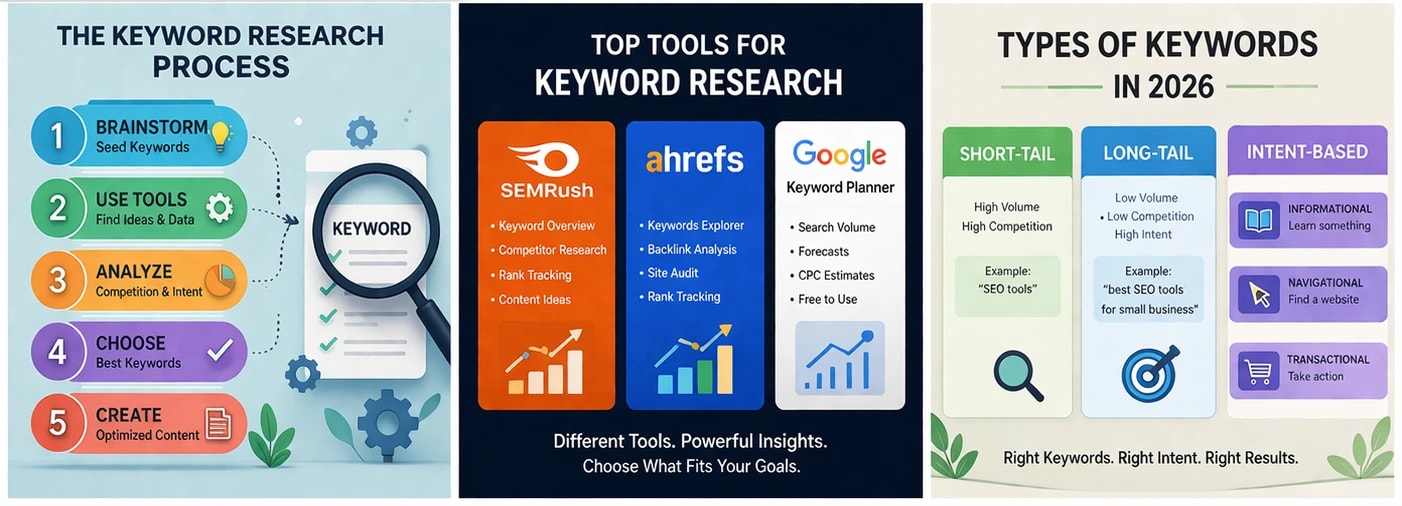
Types of Keywords in 2026
Short-tail vs Long-tail Keywords
Short-tail keywords: High volume, high competition
Long-tail keywords: Lower volume but highly targeted
Long-tail keywords are more valuable in 2026 because they match specific user intent.
Intent-Based Keywords
Informational
Users seek knowledge (e.g., “how to do keyword research”).
Navigational
Users want a specific site (e.g., “SEMRush login”).
Transactional
Users are ready to act (e.g., “buy SEO tools subscription”).
Keyword Research in 2026: Core Strategies
Focus on User Intent
Understanding why users search is more important than what they search. Always align your content with their goals.
Topic Clusters Instead of Single Keywords
Instead of targeting one keyword, build clusters of related topics. This improves authority and ranking.
Semantic SEO & LSI Keywords
Search engines now understand related terms. Using variations and synonyms helps improve content relevance.
Latest Tools for Keyword Research
SEMRush Features and Benefits
SEMRush is one of the most powerful SEO tools available today. It offers:
Keyword difficulty analysis
Competitor tracking
Content suggestions
It’s ideal for marketers who want an all-in-one SEO solution.
Ahrefs Advanced Capabilities
Ahrefs is known for its strong backlink analysis and keyword database. Key features include:
Keyword explorer
Site audit
Rank tracking
It’s perfect for deep SEO analysis.
Google Keyword Planner Insights
Google Keyword Planner remains a reliable free tool. It provides:
Search volume data
Keyword forecasts
Cost-per-click estimates
Best for beginners and advertisers.
Comparing SEMRush, Ahrefs, and Google Keyword Planner
Pricing and Accessibility
Tool | Pricing | Best For |
|---|---|---|
SEMRush | Paid | All-in-one SEO |
Ahrefs | Paid | Backlink & analysis |
Google Keyword Planner | Free | Beginners |
Data Accuracy
Ahrefs: Highly accurate for backlinks
SEMRush: Balanced data insights
Google Keyword Planner: Direct Google data
Best Use Cases
SEMRush: Competitive research
Ahrefs: Technical SEO
Google Keyword Planner: Keyword basics
Step-by-Step Keyword Research Process
Brainstorming Seed Keywords
Start with simple ideas related to your niche.
Using Tools Effectively
Input your keywords into tools like SEMRush or Ahrefs to expand your list.
Analyzing Competition
Focus on:
Keyword difficulty
Search volume
Competitor rankings
Common Keyword Research Mistakes
Ignoring Search Intent
Targeting the wrong intent leads to poor rankings.
Overlooking Long-tail Keywords
These often bring more qualified traffic.
Keyword Stuffing
Overusing keywords can harm your SEO.
Advanced Tips for Keyword Research in 2026
Using AI Tools
AI tools help automate research and uncover hidden opportunities.
Competitor Gap Analysis
Find keywords your competitors rank for—but you don’t.
Content Optimization
Update old content with new keywords to improve rankings.
FAQs
1. What is Keyword Research in 2026?
It’s the process of finding search terms using AI tools and user intent analysis to improve SEO.
2. Which tool is best for keyword research?
SEMRush and Ahrefs are best for professionals, while Google Keyword Planner is great for beginners.
3. Are keywords still important in 2026?
Yes, but focus has shifted to intent and context rather than exact matches.
4. How do I find low-competition keywords?
Use tools like Ahrefs and SEMRush to filter by keyword difficulty.
5. What are long-tail keywords?
They are longer, more specific phrases with lower competition and higher conversion rates.
6. How often should I do keyword research?
Regularly—at least once a month to stay updated with trends.
Conclusion
Keyword Research in 2026 is smarter, more strategic, and deeply connected to user intent. By using tools like SEMRush, Ahrefs, and Google Keyword Planner, and focusing on modern SEO strategies, you can stay ahead of the competition.
For more insights on SEO trends, check out this helpful resource:
🔗 https://developers.google.com/search/docs/fundamentals/seo-starter-guide